
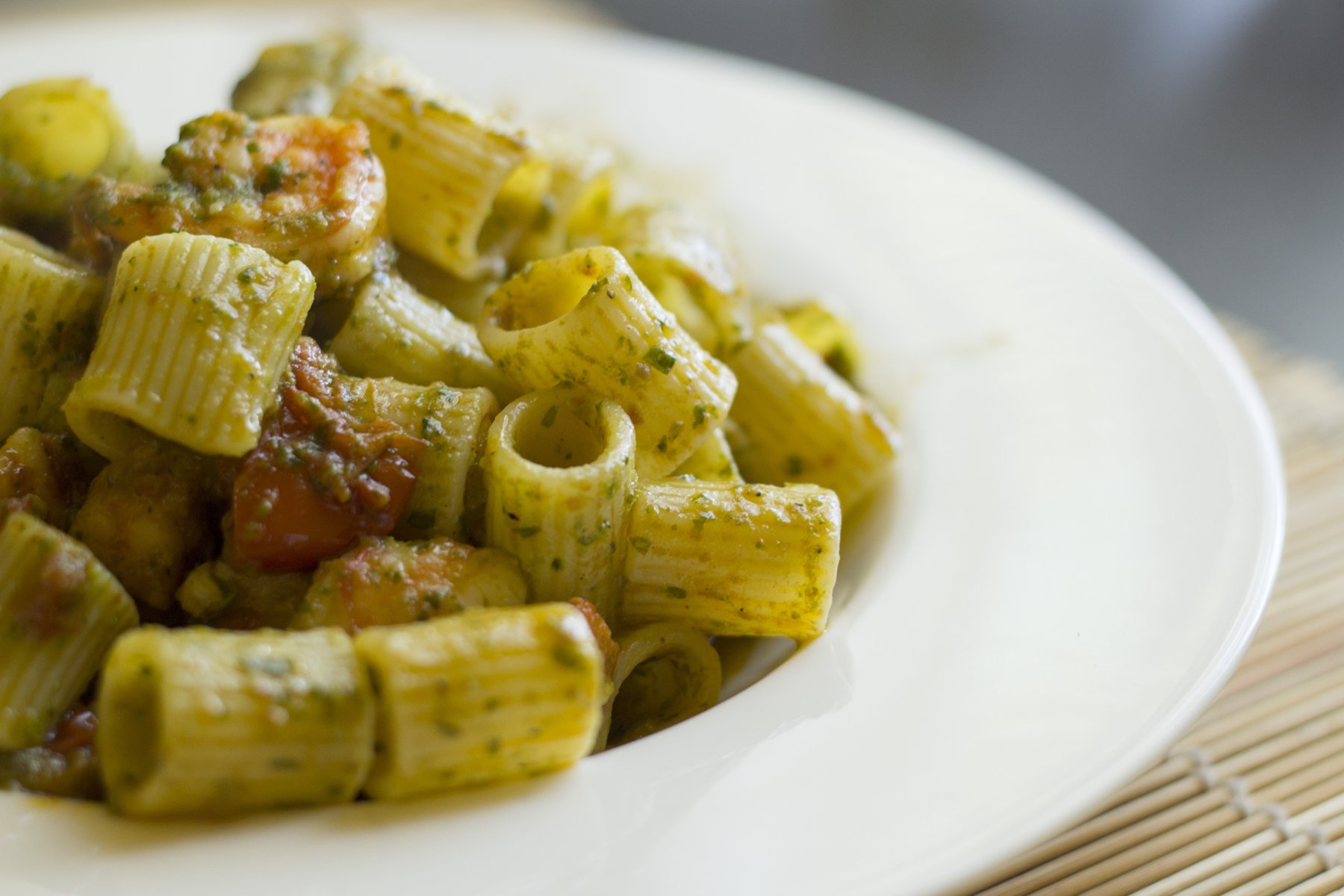
Shrimp pesto pasta is one of those dinners that tastes like summer: fresh basil pesto, sweet shrimp, cherry tomatoes and plenty of Parmesan, all tossed with hot pasta in under 30 minutes. The pesto coats every strand, the shrimp stay juicy, and the whole dish comes together with almost no effort.
You can use shop-bought pesto or make your own in five minutes — both work. The important part is the shrimp: cook them fast and hot, pull them while they are still just pink, and let the heat of the pasta finish the job. Overcooked shrimp are the only real risk here, and they are easy to avoid.
Prep Time: 10 minutes | Cook Time: 15 minutes | Total Time: 25 minutes | Servings: 4
Why You’ll Love This Shrimp Pesto Pasta
- Ready in 25 minutes — a genuine weeknight dinner.
- Fresh, herby flavour — basil pesto, lemon and Parmesan are a classic trio.
- Juicy shrimp — a two-minute sear keeps them tender and sweet.
- One pot, one pan — minimal washing up.
- Flexible — use any pasta shape, add vegetables, or swap the pesto.
- Great warm or at room temperature — leftovers make a lovely lunch.
Ingredients You’ll Need
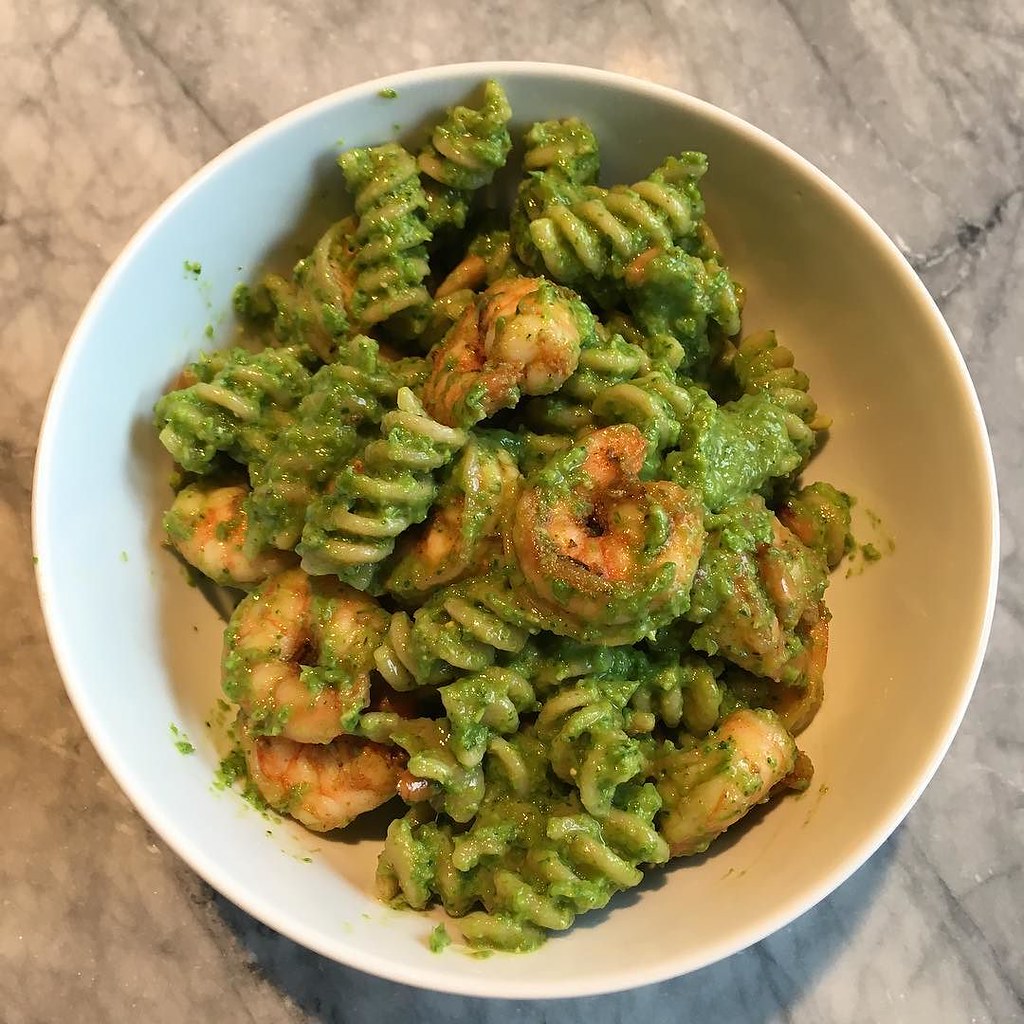
- 12 oz (340 g) pasta — rigatoni, fusilli or penne catch the pesto well; spaghetti and linguine work too.
- 1 lb (450 g) large shrimp, peeled and deveined — fresh or thawed; pat dry before cooking.
- 2 tablespoons olive oil — for searing the shrimp.
- 3/4 cup basil pesto — shop-bought or homemade; see the tip below for a quick homemade version.
- 1 cup cherry tomatoes, halved — they soften in the hot pasta and add sweetness.
- 3 cloves garlic, thinly sliced — a gentle garlic background that suits the pesto.
- 1/2 cup freshly grated Parmesan cheese, plus more to serve — salty and nutty, it ties the dish together.
- 1 lemon, zested and juiced — a squeeze at the end lifts the whole dish.
- 1/4 teaspoon red pepper flakes (optional) — a little warmth if you like it.
- 1/4 cup pine nuts, toasted (optional) — for crunch and a classic pesto flavour.
- Salt and black pepper, to taste — season the shrimp and taste before serving.
- 1/2 cup reserved pasta water — loosens the pesto so it coats the pasta evenly.
- Fresh basil leaves, to serve — for colour and aroma.
Equipment You’ll Need
- Large pot for the pasta
- Large skillet
- Tongs
- Colander
- Small dry pan for toasting pine nuts (optional)
- Measuring cups and spoons
How to Make Shrimp Pesto Pasta
- Boil the pasta. Cook the pasta in a large pot of salted water until just shy of al dente. Reserve 1/2 cup of pasta water, then drain.
- Toast the pine nuts (optional). Toast them in a dry pan over medium heat for 2 to 3 minutes, shaking often, until golden. Set aside — they burn quickly.
- Season the shrimp. Pat the shrimp dry and season with salt and pepper.
- Sear the shrimp. Heat the olive oil in a large skillet over medium-high heat. Cook the shrimp in a single layer for 2 minutes per side until pink and just opaque. Transfer to a plate.
- Soften the garlic and tomatoes. Lower the heat to medium. Add the garlic and cook for 30 seconds, then add the cherry tomatoes and cook for 1 to 2 minutes until they just start to soften.
- Add the pasta. Add the drained pasta to the skillet with 1/4 cup of the reserved pasta water. Toss for 1 minute until the pasta finishes cooking.
- Stir in the pesto. Take the pan off the heat. Add the pesto and toss until every strand is coated. Add more pasta water a splash at a time if it looks thick or dry. Pesto should never boil — heat dulls its fresh basil flavour.
- Add the shrimp. Return the shrimp to the pan with any juices. Toss gently to warm through.
- Finish with lemon and cheese. Add the lemon juice, half the lemon zest and the Parmesan. Toss once more and taste for salt.
- Serve immediately. Divide between bowls, top with pine nuts, basil leaves, the remaining zest and extra Parmesan.
Tips for Perfect Shrimp Pesto Pasta
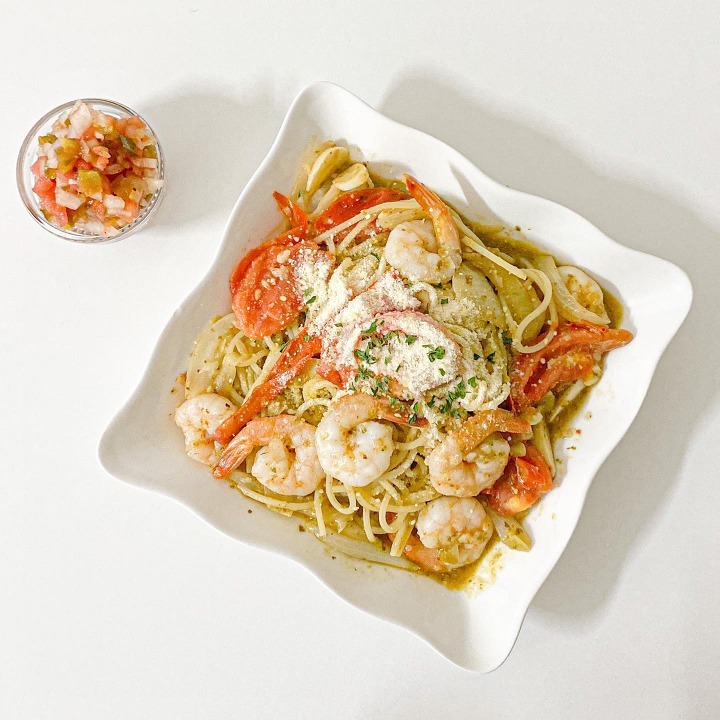
- Do not overcook the shrimp. Two minutes per side is enough. They finish in the hot pasta.
- Never boil the pesto. Stir it in off the heat so the basil stays bright green and fresh-tasting.
- Loosen with pasta water. Pesto straight from the jar is thick; starchy water turns it into a sauce that coats the pasta.
- Use good pesto. A good shop-bought pesto is fine, but check the ingredients — basil, olive oil, Parmesan, pine nuts and garlic should lead the list.
- Quick homemade pesto: Blend 2 cups basil leaves, 1/3 cup pine nuts, 1/2 cup Parmesan, 2 garlic cloves and 1/2 cup olive oil with a pinch of salt until smooth.
- Serve warm, not piping hot. Let the pasta sit for a minute after tossing so the flavours settle.
Easy Variations to Try
- Use a different pesto. Sun-dried tomato pesto, spinach pesto or arugula pesto all work with shrimp.
- Add vegetables. Asparagus tips, green beans, peas, spinach or zucchini ribbons are all excellent.
- Make it creamy. Stir in 2 to 3 tablespoons of cream cheese or a splash of cream with the pesto.
- Add a crunch. Toasted pine nuts, walnuts or breadcrumbs add texture.
- Swap the protein. Scallops, chicken or white beans all work in place of shrimp.
- Make it a pasta salad. Cool the finished pasta to room temperature, add extra tomatoes and mozzarella, and serve as a summer lunch.
What to Serve With Shrimp Pesto Pasta
- Garlic bread — always welcome with pasta.
- A tomato and mozzarella salad — fresh and simple.
- Grilled vegetables — zucchini, peppers and asparagus suit the basil.
- A green salad with lemon dressing — light and bright.
- A glass of white wine — Pinot Grigio or Vermentino are ideal.
Make Ahead and Storage
- Prep ahead: Make the pesto up to 3 days ahead and keep it covered in the fridge with a thin layer of olive oil on top. Peel the shrimp a day ahead.
- Leftovers: Store in an airtight container in the fridge for up to 2 days. The pesto will darken slightly but still tastes good.
- Reheating: Warm gently in a skillet with a splash of water, or eat at room temperature as a pasta salad. Avoid high heat, which toughens the shrimp.
- Freezing: Not recommended — the pesto loses its fresh flavour and the shrimp turn rubbery.
Frequently Asked Questions
Can I use frozen shrimp?
Yes. Thaw overnight in the fridge or under cold running water, then pat very dry before searing.
Shop-bought or homemade pesto?
Both work. Homemade tastes fresher, but a good refrigerated pesto is a fine shortcut. Avoid shelf-stable jars with a long ingredient list if you can.
What pasta shape is best?
Short shapes like rigatoni, fusilli and penne catch the pesto in their ridges. Long pasta like spaghetti and linguine also work well.
Can I make this dairy-free?
Use a dairy-free pesto and skip the Parmesan, or use nutritional yeast for a cheesy flavour.
Why did my pesto turn brown?
Pesto darkens with heat and air. Stir it in off the heat, serve promptly, and press cling film directly onto leftover pesto to keep air out.
Can I add cream?
Yes — a splash of cream or a spoonful of cream cheese makes a richer, silkier sauce. Add it with the pesto, off the heat.
Is this good cold?
Yes, it makes a great pasta salad. Cool, add extra tomatoes and a little more olive oil, and serve at room temperature.
Nutrition (Estimated)
Per serving (1 of 4): about 560 calories, 30 g protein, 52 g carbohydrates, 25 g fat, 3 g fibre, 580 mg sodium. Values are approximate and will vary with the exact ingredients and portion size.
